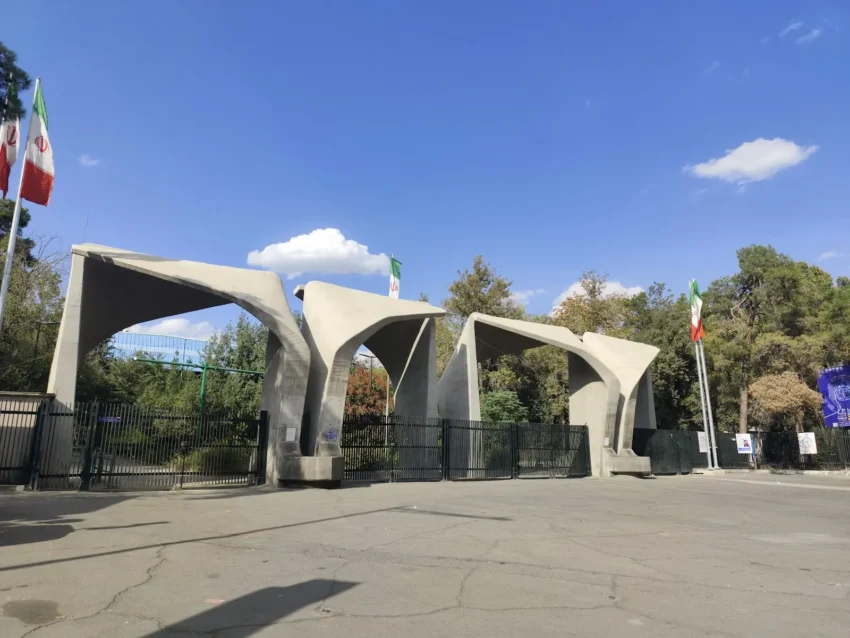
Research on India in Iran.
Syed Mostafa Mostafavi is M.A. in Indian Studies from University of Tehran, Iran has written a research paper under the guidance Heshmat Sadat Moinifar, an Associate Professor of Sociology at University of Tehran, Iran. It is titled as:
Globalization and the Conduct of Hindu Radicalism in Authority. University of Tehran Cite this article as : Moinifar, H. S., & Mostafavi, S. M. (2023). Globalization and the Conduct of Hindu Radicalism in Authority. Journal of World Sociopolitical Studies, 7(2), pp. 353-386 https://doi.org/10.22059/wsps.2024.364909.1378
Summary of Tehran Paper
Section 1: Introduction
Establishes Hindu-Muslim tensions post-1947 partition and BJP’s emergence as INC’s rival. Poses core question: Has globalization moderated radical Hindu voting patterns and interfaith dynamics? Hypothesis claims globalization reduces BJP support and radicalism.
Sections 2-3: Historical Context & BJP Evolution
Details Sangh Parivar structure (RSS, VHP, Bajrang Dal) and Hindutva ideology from Savarkar. Documents BJP’s growth from 2 seats (1980) to 282 seats (2014) despite fluctuating vote shares (7.74% to 31%), attributing success to moderating slogans post-Babri (1992) and Gujarat riots (2002).
Section 4: Globalization’s Impact
Argues globalization penetrates India’s cultural spheres via media proliferation (50 to 500+ TV channels by 2010). Claims it fosters “Hindutva neo-liberals” like Modi, blending market reforms with Hindu revivalism, contrary to moderation hypothesis.
Section 5: INC vs. BJP Electoral Data
Presents tables showing BJP’s seat gains outpacing vote shares (Table 1: INC+BJP ~50% total; Table 2: BJP from 2 to 282 seats). Notes coalition necessities forced BJP moderation on issues like Ayodhya temple.
Sections 6-7: Discussion & Conclusion
Contradicts hypothesis: BJP thrives under globalization by shifting from communal to “good governance” rhetoric, maintaining base despite riots. Warns of persistent radical undercurrents threatening minorities, though evidence stays descriptive.
Academic Analysis
The Paper has distinct qualities. These are
- No Hate Speech: The paper uses academic language and cites sources. It discusses documented events (Gujarat riots, Babri Mosque demolition, communal violence). These are legitimate topics for scholarly analysis. Indian opposition parties, journalists, and academics say far harsher things about the BJP daily.
- Legitimate Concerns: Hindu nationalism may raise genuine questions about minority rights, secularism, and pluralism in India. The RSS’s ideology, communal violence, and the 2002 Gujarat riots are real issues worthy of analysis.
- Similar Critiques from Within India: Scholars like Ashis Nandy, Romila Thapar, and activists within India make comparable arguments. International observers at Human Rights Watch and Amnesty have raised similar concerns.
- Academic Freedom: Iranian scholars have the right to study Indian politics. Geographic location doesn’t automatically invalidate analysis.
But when conclusion section in a research paper has to create arguments, desperation is apparent. Apart from that this research paper exhibits several structural and argumentative weaknesses that suggest analytical desperation rather than rigorous scholarship.
Fundamental Methodological Problems:
The paper lacks a clear, testable hypothesis. The authors claim globalization moderates Hindu radicalism and weakens radical parties’ bases. However, their own data contradicts this. The BJP grew from 2 seats (1980) to 282 seats (2014), while vote share increased from 7.74% to 31%. This demonstrates strengthening, not weakening.
Contradictory Evidence:
The authors acknowledge the BJP’s electoral success but then argue this represents moderation. They cite changed campaign slogans as evidence. This confuses tactical messaging with ideological transformation. A party adopting economic rhetoric while maintaining RSS connections and Hindutva ideology hasn’t moderated. It has simply professionalized its electoral strategy.
Circular Reasoning:
The paper argues globalization causes moderation because the BJP changed slogans. Then it uses changed slogans as proof of globalization’s impact. No independent variables are tested. No comparative analysis with non-globalizing periods exists.
The Desperate Conclusion:
The conclusion recycles earlier points without synthesis. It lists problems (discrimination continues, communal violence persists, minority insecurity grows) that undermine the core thesis. The authors essentially conclude that despite globalization, radicalism persists and minorities remain threatened.
This is the paper’s central failure. The evidence supports the opposite of what the authors claim to prove.
Missing Analysis:
Real analysis would examine whether economic liberalization actually reduced communal violence, whether globalization metrics correlate with electoral moderation, or whether RSS influence over BJP decreased. None of this appears.
The conclusion creates no new argument because the paper never established its original one convincingly.
Credentials in Theological State.
A student of Tehran University has gumption to discuss plural democracy of India. The Irony is Profound. Both authors work at the University of Tehran in the Islamic Republic of Iran, a theocratic state where:
- Religious minorities face systematic discrimination
- Baha’is are denied education and employment
- Apostasy from Islam can carry death penalties
- Women have fewer legal rights than men
- Political dissent is brutally suppressed
- Elections exclude candidates not approved by religious authorities
Writing from Tehran about:
“Pluralistic, secular, nonviolent democracy” in India, condemning discrimination against minorities, and warning about religious nationalism’s dangers to democratic values.
The Uncomfortable Questions:
Why don’t they apply this analytical framework to Iran? Why focus on Hindu nationalism while ignoring Islamic theocracy? Can scholars operating under clerical oversight genuinely analyze religious radicalism?
Possible Explanations:
- Political Safety: Criticizing India is safe. Criticizing Iran’s system is dangerous.
- Ideological Alignment: The paper might serve Iran’s regional interests by portraying its rival (India, increasingly aligned with the West and Israel) negatively.
- Genuine Scholarship Constrained: They may recognize these contradictions but cannot address them openly.
The Academic Problem:
The paper never acknowledges this elephant. No reflexivity about analyzing pluralism from a non-plural context. No comparison between religious nationalism in different forms (Hindu vs. Islamic).
This omission doesn’t just undermine credibility. It raises questions about whether the paper’s purpose is scholarship or political commentary disguised as research. A classic stone throwing from a GlassHouse.
Iran’s Actual Record on Religious Minorities:
- Ahmadis: Considered heretics, face arrest and persecution
- Ismailis (Agha Khan followers): Discriminated against, their practices restricted
- Baha’is: The most persecuted – barred from universities, denied jobs, properties confiscated, leaders imprisoned
- Sunni Muslims: No mosque permitted in Tehran despite being 10% of population
- Christians and Jews: Tolerated only if they don’t proselytize, face legal discrimination
- Atheists/Ex-Muslims: Face death penalty for apostasy
Meanwhile, These Authors Write:
“Discrimination against minority groups has been prevalent, with organized attacks on their lives and property… This creates an insecure society for minorities and their future.”
They could be describing Iran verbatim. Yet they write this about India.
The Stunning Double Standard: India, with all its problems, has:
- Muslim presidents (Abdul Kalam, Zakir Husain)
- Sikh prime ministers (Manmohan Singh)
- Buddhist billionaire Sridhar Vembu of Zoho software.
- Christian who converted after midlife, Harish Salve is Govt.’s favourite lawyer
- Christian chief justices
- Parsi business leaders (Tata family)wsps
- Muslim Billionaires (Khorakiwala, Premji etc.)
- Constitutional protections for minorities
- Actual democratic elections where anyone can run
Iran has none of this.
Academic Dishonesty:
For scholars to analyze religious radicalism and minority persecution without disclosing they work in a theocratic state that systematically persecutes religious minorities is intellectually dishonest. Their institutional affiliation isn’t just biographical detail. It’s fundamentally relevant to their analytical framework and credibility.
Now look at their academic credentials:
Heshmat Sadat Moinifar:
- Position: Associate Professor of Sociology at University of Tehran
- Specialization: Sociology of Family, women’s education
- Research Focus: Family planning, women’s higher education in Iran, American television programs
- Notable Work: “Religious Leaders and Family Planning in Iran” (2007), studies on women’s education in Iran
- Background: A sociologist with no apparent expertise in Indian politics, religious nationalism, or comparative political systems
Seyed Mostafa Mostafavi:
- Degree: M.A. in Indian Studies from University of Tehran
- Position: Was a student when this research was conducted (the paper is based on his M.A. thesis)
- Self-described expertise: “Radical Hinduism”
- Research Output: Limited academic publications, primarily focused on this single topic
- Other listed expertise on ResearchGate: Inexplicably includes “Histology” (the study of tissue structure)
Critical Observations:
- Supervisor-Student Relationship: This appears to be an M.A. student supervised by a sociology professor with zero expertise in India.
- No India Experience: Neither author shows evidence of having studied, worked, or conducted fieldwork in India.
- Wrong Discipline: The lead author is a family sociologist who suddenly decide to write about political radicalism and globalization.
- Junior Researcher: The second author was a graduate student with an M.A., not a Ph.D., analyzing complex political dynamics.
- No Comparative Framework: Neither has published work comparing religious nationalism across different contexts (which would require acknowledging Iran’s theocracy).
This is essentially a student thesis supervised by someone unqualified in the subject area, published in their own university’s journal. The credentials make the analytical gaps even more glaring.
Plagiarism Disguised
The Paper is no sloppy copy paste job. It is intellectual jujitsu. It relies on following sources as reference:
- Meera Nanda’s (2009) – “The God Market”
- Thomas Blom Hansen (1999) – “The Saffron Wave”
- Arvind Rajagopal (2001) – on media and Hindu nationalism
- Katharine Adeney & Lawrence Saez (2005) – on coalition politics
- Election Commission of India – data for vote statistics
The paper cites Meera Nanda 9 times. It has copied her entire framework about globalization and Hinduism. The paper actually uses specific quotes from her paper. They weaponize Nanda against her own evidence, exploiting academic citation norms to launder regime-friendly anti-Hindu rhetoric.
The Tehran paper cherry-picks Nanda to support its failed moderation hypothesis, ignoring her central claim that globalization fuels Hindu nationalism’s cultural hegemony. In doing so they contradict their data showing BJP’s growth to 282 seats in 2014.
Nanda argues that Globalization is MAKING India MORE Hindu. (that’s literally her book title) but the The Iranian authors claim that Globalization is making Hindu radicalism MORE MODERATE.
They’ve completely inverted Nanda’s thesis while using her data and analysis.
Atrocious Gumption from Iran
Iran’s recent protests, erupting since early January 2026, had escalated to include mosque arson in Tehran alongside widespread anti-regime demonstrations.
Protests initially sparked by inflation and currency collapse have turned explicitly political, with chants against Ayatollah Khamenei and demands to end clerical rule. Verified videos show a mosque ablaze in Saadat Abad district amid chaotic street clashes, while Tehran’s mayor reported over 30 mosques and 50 banks torched nationwide.
Despite unrest, Iran’s mandatory hijab enforcement persists via Article 638 penalties (fines, lashes, imprisonment). January 2026 saw intensified surveillance and business raids targeting noncompliance, though protests focus on economic grievances rather than gender laws specifically. The protests were suppressed brutally. It involved killing of citizens, the number of whom remains speculative between few hundred to several thousand.
Moinifar and Mostafavi, writing from University of Tehran, critique Hindu nationalism’s minority threats. They wrote under a regime that killed a large number of its own citizens. Their 2023 paper’s warnings about BJP’s “persistent radical undercurrents” mirror Iran’s theocratic suppression without the flames. Yet, they frame India as uniquely dangerous. They are afraid of the mirror which they mistook as India’s picture.
This isn’t scholarship. It’s psychological deflection dressed in academic language.
References:
- Iran Burning: https://www.firstpost.com/world/47-years-of-rage-irans-mosque-set-on-fire-as-protestors-chant-slogans-amid-uprising-watch-13967403.html
- Meera Nanda: The God Market. (2009): https://sandeepbhalla.in/tag/meera-nanda