
China’s Sinking Cities
China’s problems stack up differently than they appear. The housing collapse, export fall, and tariffs all connect to one thing. Debt. China borrowed heavily to build. Now the bills come due. Housing shaved away 30% of GDP. Evergrande and others sold apartments before building them. They used that money to buy more land and start new projects. The cycle worked until buyers stopped believing.
Exports are falling because global demand weakened. The tariff war makes it worse. Countries now question their dependence on Chinese manufacturing. They’re diversifying supply chains. Stagflation at home comes from the same root. Growth slowed but prices stay sticky. The government pumped money into infrastructure for decades. That spending created inflation without matching productivity gains. Now sinking cities add a new dimension.
This isn’t a financial problem you can fix with policy. It’s physics. When you drain groundwater and pile concrete on top, the land settles.
China built too fast
China is paying the price of being too fast and being unprepared for future. The numbers tell the story. Shanghai sank 1.76 meters between 1921 and 1965, before the real development even started. Beijing dropped 1.5 meters in some areas. Tianjin began sinking in the 1930s and passed one meter by the 1960s.
Today, 45% of China’s urban land is subsiding. Some Shanghai neighborhoods drop 10 millimeters each year. The blue dots on subsidence maps cover the entire coast. The cause is straightforward. Cities need water. Industry needs water. People need water. China’s urban population jumped from 191 million in 1980 to 831 million by 2018. That’s 640 million new city dwellers in four decades. All that water came from underground. Groundwater levels fell more than 100 meters in 70% of subsiding areas. When you drain the sponge beneath a city, the city sinks.
Then add weight. Shanghai built 800 kilometers of metro lines between 1993 and 2018. Skyscrapers sprouted everywhere. China now has over half the world’s 100 tallest buildings. Most sit in sinking cities like Shanghai and Guangzhou. Mining carved out 25,000 square kilometers of land. That settled the ground too.
Speed mattered here. Construction raced ahead of planning. Nobody stopped to ask what happens when you build this fast, this heavy, on land you’re draining dry.
Economic Impact
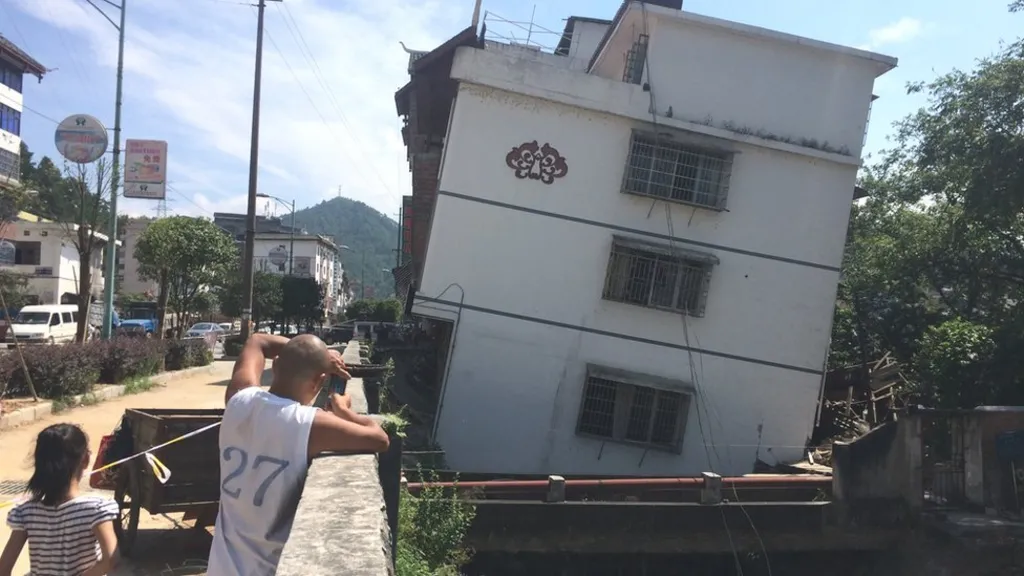
Multi-story buildings develop cracks. Parking garages collapse. Support pillars tilt and fail. People evacuate. These aren’t theoretical problems on engineering drawings. They’re happening now. The economic trap is the painful part. Building that apartment complex added to GDP. The construction jobs, the materials, the sales all counted as growth. Now it’s worthless. The homeowner still pays the mortgage but can’t live there. Insurance won’t cover it. Natural causes, the contracts say.
This is what the lecturer calls “dead GDP.” You built it. It counted as progress. Now it’s gone, and you get nothing back.
Worse, fixing these problems costs money. The PLA Daily notes that maintenance now exceeds spending on new equipment. You earn money, but it flows back into repairs. The serpent eating its tail. This creates a self-limiting factor. China can keep growing, but a chunk of that growth gets consumed fixing what broke. The faster you built before, the more you pay now.
Comparison with India
The comparison with India is instructive. Chennai faces similar risks. Sea levels could rise one meter by 2100. The lecturer’s house sits three kilometers from the coast. With that rise, he’d be on the beach. Chennai also floods when typhoons hit because people built on former lake beds. The city responds slowly, fixes problems gradually. This isn’t because India plans better. It’s because India builds slower.
That slower pace means problems surface before they reach Chinese scale. You see flooding, you stop building there, or you adapt. You don’t end up with hundreds of abandoned apartment towers.
Effect on China
This will destroy not China. China will survive. The economy will keep running. But the cost is real. Tens of millions face property risk. Infrastructure needs constant expensive repairs. Future earnings go to fixing past mistakes instead of building new things. Growth continues but gets dragged down by this maintenance burden.
The problem isn’t unique to China. Jakarta sinks. Mexico City sinks. Houston sinks. Any city that extracts groundwater while adding weight faces this. The Netherlands lives below sea level and manages fine with dikes.
What makes China’s case notable is the scale and speed. 45% of urban land subsiding. Over 900 million urban residents. Decades of breakneck construction without adequate planning. The bill for all that comes due now.
Solutions
China is implementing solutions. Groundwater restrictions in major cities. Alternative water sources. Better building codes. Shanghai’s subsidence has slowed since the 1990s. These fixes work, but they cost money and take time. Rapid development without planning creates expensive legacy problems. You can’t just build and leave. Maintenance becomes a permanent tax on growth. The faster you went up, the harder you work to stay level. This doesn’t cap development completely. China remains a major economy. Technology advances. Solutions exist. The country has resources to address these issues.
But the easy growth phase is over. Every percentage point forward now requires fixing something behind. That’s the self-limiting factor. Not collapse. Just harder, slower, more expensive progress than the sprint of the past forty years. The numbers are clear. The economic logic is sound. China built a lot, built it fast, and now pays to keep it standing.
Payback Time
You can restructure debt. You can negotiate tariffs. You can adjust monetary policy. But you cannot quickly reverse subsidence affecting 45% of urban land. The maintenance burden grows each year. Buildings need repairs. Metro lines need reinforcement. Flood defenses need upgrading. This spending doesn’t create new growth. It just prevents collapse.
Think of it as compound interest working backwards. Every yuan spent fixing what sank is a yuan not building something new. The faster you built before, the more you pay now. China’s problems aren’t endless. They’re interconnected. The same growth model that created the housing bubble also created the subsidence crisis. Build fast, worry later. The system worked when growth was high enough to outrun the problems. That phase ended. Now problems catch up faster than solutions appear.
The sinking cities reveal something deeper. You can hide bad debts in financial statements. You can massage export numbers. You can claim growth targets. But you cannot hide a building with cracks in the foundation.
Physical reality doesn’t negotiate.
References:
Main subsidence study: https://www.science.org/doi/10.1126/science.adl4366
Shanghai historical subsidence: https://www.ncbi.nlm.nih.gov/pmc/articles/PMC6696418/
General China subsidence overview: https://www.bbc.com/news/science-environment-68830448
World Bank urbanization data: https://data.worldbank.org/indicator/SP.URB.TOTL.IN.ZS?locations=CN
China urban population statistics: https://www.statista.com/statistics/278566/urban-and-rural-population-of-china/
Coastal subsidence and sea level risk: https://www.scientificamerican.com/article/chinas-sinking-coastal-cities-face-dire-sea-level-rise-threat/
Beijing subsidence rates: https://www.theguardian.com/world/2024/apr/18/china-cities-sinking-sea-level-rise
New York Times coverage: https://www.nytimes.com/2024/04/18/climate/china-sinking-cities.html
Nature journal research: https://www.nature.com/articles/s41893-024-01287-z
General subsidence causes and impacts: https://www.cgdev.org/blog/chinas-sinking-cities-signal-coastal-crisis