(Part 2)
Trajectory of Pakistan
Countries have armies but Army of Pakistan has a country to exploit, to sustain from and to extract. Army runs all types of businesses in Pakistan under the banners like Fouji Foundation. The army has never won a war but it has never lost an election. This is what we all know about Pakistan but its implications are grave.
Pakistan is a terrain which is ruled by Military but enforced by power. Who wields this power is a matter of practical detail which is a variation which changes frequently. In part 1 of this article we have seen how Pakistan is heading towards anarchy. How Police has ceased to be representing the raw power of State.
Pakistan is a society structured around principles that make recovery extraordinarily unlikely within any foreseeable timeframe. Pakistanis did not choose it. They are born into it, shaped by it, and have no external reference point. Dysfunction becomes so normalized that imagining alternatives requires extraordinary mental effort. But as demonstrated in part 1 of this article, an epistemologically closed society often lacks that capacity.
Historical Nostalgia
Pakistan is one country in the world where its citizens have no nostalgia about its land or past. They do not relate to the land at all. They claim to be Turkish, Central Asian or Arab. It does not matter what the genetics say or what they look like in the mirror. It is a matter of belief.
An average Pakistani does not know about the Harappan or Indus Valley Civilization, or Mohenjo-daro, the very foundation of South Asian culture. It originated in what is now Pakistan. The river that gave India its name flows through territory that has become unrecognizable.
The Ukraine parallel is precise and chilling. A land that was culturally foundational to Russian identity is now destroyed. Millions fled. Infrastructure ruined. Its industries are destroyed and economy has collapsed. What remains will take generations to rebuild, starting from subsistence agriculture.
Territorial Disintegration
Pakistan is already fragmenting internally. Khyber Pakhtunkhwa or KPK is functionally autonomous. The state’s writ doesn’t extend there. Tribal areas operate under their own logic, shaped by decades of Taliban presence and militant infrastructure.
Balochistan is even more telling. Ordinary Pakistanis cannot travel there safely. When military convoys are attacked regularly, it means the state controls only corridors, not territory. That’s not governance but occupation.
Sindh’s “Na Khappe” movement demanding separation shows the center cannot hold even the heartland. When the province containing Karachi, Pakistan’s economic engine, agitates for independence, the state’s legitimacy is fundamentally contested.
This internal collapse is happening while the state still maintains nuclear weapons and a large military. That combination is uniquely dangerous. Unlike Afghanistan, which collapsed into warlordism, Pakistan has concentrated military power alongside fragmenting civilian control.
The Indus flowing through this disintegrating territory is the ultimate irony. The river that named a civilization now runs through a state that cannot govern its own provinces. The cradle of Indian culture has become a cautionary tale about what happens when societies organize around permanent conflict.
Pakistan has geopolitical importance that prevents abandonment. Aid flows continue. The military remains funded. The nuclear arsenal ensures international attention. This means the society can persist in dysfunction indefinitely without hitting bottom hard enough to force reconstruction. But it assumes that no new problem does not hit the society. Facts do not agree with assumption.
Treaty as Weapon
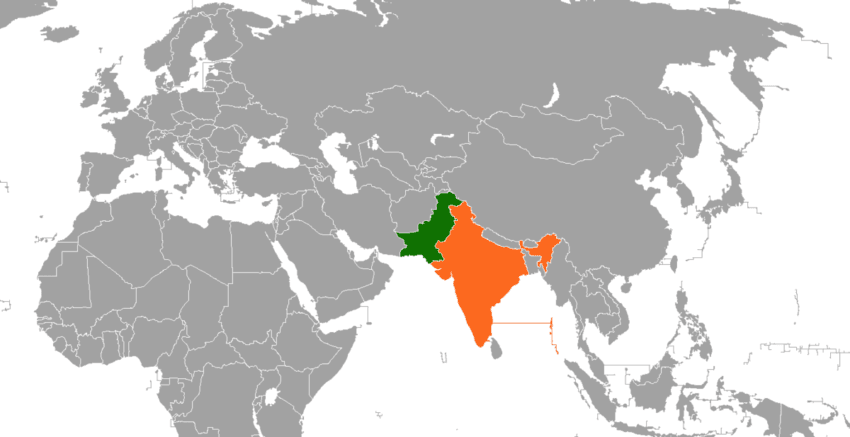
Pakistan has no source of water. The rivers which flow, originates from other countries. Those who created it as an independent country did not care. Those who agreed to such a division care to rule it more than they cared for its survival. Its three rivers originate from India. Fourth river originate from Afghanistan. Together it forms the Indus Water River System. Pakistan has a treaty with India, called Indus Water Treaty.
The Quranic Concept of War reveals a doctrine that treaties are instruments of weakness. Jihad is the duty of strength. Peace is not a goal. It is a pause. Once power is achieved, restraint becomes sin, not prudence. Agreements are not commitments but tactics.
Brigadier Malik’s framework in that book, assumed a crude binary: treaty equals weakness, jihad equals strength. What Pakistan’s later conduct demonstrates is something more sophisticated and corrosive. Treaty itself can be operationalized as a weapon.
A treaty does not have to be violated to be weaponized. It only has to be proceduralized. Once obligations are routed through committees, objections, technical reviews, and interpretive disputes, compliance can be delayed indefinitely while remaining formally within the treaty. Power is exercised not by breaking rules, but by exhausting the other party inside them.
That is precisely how the Indus Waters Treaty has functioned in practice. Projects that do not reduce downstream water availability can still be stalled through objections, neutral expert processes, or arbitration escalation. No water is lost to Pakistan, yet time, capital, and planning certainty are drained from India.
When open war is costly, law becomes the battlefield. When guns are constrained, paperwork advances. The treaty that Pakistan weaponized through proceduralism is now being set aside. India is no longer exhausting itself inside legal frameworks.
India has suspended the Indus Waters Treaty. It may be terminated soon. India is building infrastructure to divert water, on war footing. It means the western rivers Pakistan depends on will face reduced flows.
Worst, Pakistan does not have access to monitor the upstream river flow data. India is not obligated to give warning of sudden release of water as it was under IWT and such release may cause flood.
Water and Water
Thus, Pakistan has two problems. No water and excess water alternating without warning and without any consistent cycle.
Pakistan’s entire existence depends on the Indus river system. Punjab’s agriculture, Sindh’s irrigation, Karachi’s water supply, all flow from these rivers. Without water security, the state becomes unviable regardless of military strength or nuclear weapons. Even before suspension of IWT, Karachi does not have regular water supply. Water has to be purchased from private water tanker suppliers.
Now, Afghanistan is also building infrastructure on the Kabul River. Combined with suspension of IWT, it is catastrophic for Pakistan. The Kabul River contributes significantly to the Indus system. Afghanistan has no treaty obligations and every incentive to maximize its own water use. Pakistan cannot pressure Afghanistan militarily or diplomatically. It has no leverage.
The timing is devastating. Internal fragmentation in KPK, Balochistan, and Sindh is happening precisely when water security is collapsing. Provinces will compete for diminishing resources. Sindh already resents Punjab’s water allocation. When actual shortages arrive, not just allocation disputes, the center cannot hold.
The Indus shrinking is not metaphorical decline. It’s the physical infrastructure of survival disappearing. Pakistan now faces resource collapse it cannot manage.
The cradle of civilization may become uninhabitable not through war but through water scarcity. That’s the final irony. The river that sustained Mohenjo-daro for millennia may not sustain Pakistan for another generation. No country can supply Pakistan with water except India. Therefore, the possibility of a reconciliation with India is the only possible solution.
Reconciliation with India
A worldview that treats every settlement as provisional and every agreement as tactical cannot sustain trust, whether between states or within society. Art, poetry, and shared language require good faith continuity. They assume that words bind, not merely delay.
IWT was just one of the many treaties. Pakistan has never honoured any pact. It took advantage of the treaty but soon forget its remaining terms. The Partition in 1947 was itself a tripartite treaty between Muslim League, Congress, and British.
Partition happened on 15 August 1947 and on 21st October Pakistan Army was in Kashmir to take over. The war of 1965 resulted in Tashkent Treaty under which India returned the territories to Pakistan on assurance of peace. In 1971, it was Pakistan which started the war with air strike. The Shimla Peace Accord stipulated to resolve all disputes by mutual negotiations and India released 93000 war prisoners but Pakistan took no time to forget about it. It raised the disputes not only in United Nations regularly but at every available forum which included nonpolitical forums.
Until this time Pakistan was a problem of the Government and the armed forces of India. But Pakistan chose to become an everyday problem for citizens of India. There have been 18 terror bombing attacks on India. Check this link for details.
A.S. Dulat was the Chief of India’s intelligence Agency R&AW from 1999 to 2000. He had a close relationship with Asad Durrani, a retired 3 star general in Pakistan Army who had also served as chief of Pakistan intelligence agency ISI in from 1990 to 1991. Together they wrote a book called “Spy Chronicles” in 2018. Durrani was to launch the book together with Dulat in India but he was denied Visa. In the year 2000 Durrani was Pakistan’s Ambassador to Saudi Arabia, a most coveted diplomatic posting for any Pakistani.
On 24 December 1999 a passenger plane of Indian Airlines which was on flight IC-814 was hijacked and taken to Amritsar, Lahore, Dubai to finally land at Kandahar in Afghanistan. One hostage was killed and 17 hostages were injured. After a negotiated release of hostages was secured on 31 December 1999. Dulat despite his personal relations could not prevent the death of a hostage. This demonstrate autonomous nature of violence and terrorism that emanate from Pakistan.
The hijacking is alleged to be a part of the millennium attack plots in late 1999 and early 2000 by Al-Qaeda linked terrorists. For the record, in year 2000 Dulat was made advisor to the Government after his tenure ended as Secretary R&AW. He served till the end of tenure of government in 2004.
In 2008, 26/11 attacks happened when a Pakistan’s Minister was in India holding talks and had to be safely escorted airport to leave India. India’s home Ministry’s team was in Murray, a hill station inside Pakistan which had no cellphone connectivity. Read about details of it in R.V.S. Mani’s book Hindu Terror: Insider Account of Ministry of Home Affairs. He may be overemphasizing a conspiracy theory of complicity between officials of Indian government with Pakistan but nobody would like to be in that situation again.
Lahore pact before Kargil invasion is even more stark. While the Prime Minister of India was signing a Peace Accord with his counterpart in Lahore, Army was mobilizing its troops to climb Kargil hills. It wasted no time in waiting for ink of agreement to dry.
Every Government who entered in treaty with Pakistan was criticized. Now, after Operation Sindoor and suspension of Indus Water Treaty, any new treaty will be like turning a clock back after it has lost its hands to display.
The Migration
The Harappan civilization didn’t collapse through invasion or war. It dispersed because the Saraswati River system dried up. When the water disappeared, the cities emptied. People migrated eastward toward the Gangetic plains. The urban centers were abandoned.
Now the Indus faces a similar trajectory. Not through natural climate shift alone, but through upstream diversion and treaty collapse. The mechanism is different but the outcome is the same: a river system can no longer sustain the population dependent on it.
Pakistan’s situation is worse than ancient Harappa in one crucial way. The Harappans could migrate. Modern nation-states have borders. Where do 240 million people go when the Indus shrinks?
India won’t accept mass migration. Afghanistan is already struggling. Iran has its own water crisis. The Gulf states take only skilled labor. Europe is thousands of miles away.
This means the population will be trapped in place as resources diminish. Internal migration from Sindh and Punjab toward remaining water sources will destabilize provinces already demanding autonomy. The military will control water infrastructure, making it a weapon in internal conflict. But military can not ensure crops. It is already importing wheat from other countries. At best it will continue to import more. Foreign Currency reserve is already depleted. Who will supply foreign exchange?
Imports are expensive. The common man may not afford to buy it and resort to desperate measures to afford it. Crime often remains the only choice in such circumstances.
The Food Scarcity
When food scarcity and unbearable inflation hit simultaneously, social order collapses faster than most people anticipate.
First comes hoarding. Those with resources stockpile. Markets empty not because supply has vanished but because no one releases inventory. Prices become meaningless because nothing is available at any price.
Then comes desperation. People who’ve never stolen before start stealing. Not organized crime but survival theft. Bread riots begin. Police either join the looters or retreat entirely. The state loses monopoly on violence not through armed rebellion but through mass noncompliance.
The middle class, which provides stability in any society, disappears. They cannot hoard like the rich. They cannot subsist like the poor. They flee if they can or fall into poverty if they cannot. This is the group that staffs institutions, runs businesses, maintains infrastructure. When they’re gone, everything stops functioning.
The military will take direct control of food distribution. This means rationing, which means corruption, which means those with connections eat while others starve. The army becomes the only institution that matters because it controls the only resource that matters: calories.
Flight of Elite
Field Marshal Asim Munir is now Chief of Defence Staff who has immunity from prosecution and security of office through a Constitutional Amendment till 2030. He is most influential and secured citizen of Pakistan.
Yet he has relocated his family to the USA with fast-track visas. That’s the signal. When the defence chief moves his family abroad, he is acknowledging the system is unsalvageable. He is not planning to stay and fix it. He is planning an exit, after making a killing in office.
The elite and rich have two passports. They will extract what they can and leave when extraction becomes impossible. They have Dubai, London, Toronto waiting. Their children already study abroad. Their assets are already offshore.
This is the Lebanon model. The elite hollowed out the state while maintaining dual citizenship. When the collapse came, they left. What remained was a population trapped with no functioning institutions, no currency stability, no electricity, no medicine.
Pakistan’s situation will be worse because of scale. Lebanon is small. Its diaspora is large and sends remittances. Pakistan has 240 million people. The diaspora cannot support that population. And neighboring countries will not accept mass migration.
The Future of Pakistan
The state will continue to exist formally but will stop functioning practically. Provinces become autonomous not through political declaration but through necessity. Sindh controls its ports. Punjab controls its agriculture or whatever little is left of it. KPK and Balochistan are already gone. Gawadar is owned by China. The military may control Islamabad and nuclear weapons.
Violence becomes decentralized. Not civil war with clear sides but generalized insecurity. Gangs, militias, tribal groups, religious factions all compete for resources. The police become just another armed group among many.
This is the anarchic equilibrium. Not total collapse but permanent low-level chaos. Functional enough that international powers don’t intervene. Dysfunctional enough that ordinary people cannot build lives. Irony of fate has rendered the cradle of civilization uninhabitable but not unpopulated.
The Revival
Societies don’t simply choose to reorganize themselves once dysfunction becomes normalized. The mechanisms that could enable reform are precisely what anarchic conditions destroy first. There exists no trust, accountability, neutral institutions, or shared truth.
In Europe the church didn’t lose power through internal reform but through exhaustion and external pressure. The Thirty Years’ War killed millions before the Peace of Westphalia established new principles. Recovery took generations, not years.
Afghanistan’s trajectory is even grimmer. Over a century of violence, foreign intervention, ideological extremism, and warlordism has produced institutional collapse so complete that statehood itself is contested. Each generation inherits dysfunction as baseline reality. There’s no living memory of functional governance to return to.
Arabia under tribal warfare was similarly trapped until external force and oil wealth created conditions for imposed order. Even then, stability came through authoritarianism, not organic civic development.
Mechanisms for Reversal
Pakistan’s situation combines the worst elements. Unlike Afghanistan, it has nuclear weapons and a professional military. Unlike pre-oil Arabia, it has modern infrastructure and educated elites. But like both, it has normalized violence, weaponized religion, and made trust structurally impossible.
Recovery often requires exhaustion so complete that continuation becomes impossible. But modern states don’t collapse cleanly. They linger in dysfunction for decades, causing immense suffering while remaining viable enough to prevent collapse. Reversals do not happen without a long period of repentance over past policies.
Therefore, a long and tiring period of lull awaits Pakistan. It will be longer than in reasonable measurements. Pakistan has taken slightly about 8 decades to reach here and it would be lucky to make a reversal in next eight decades.
Conclusion:
The young Indians must understand that Pakistan isn’t just politically hostile, it’s structurally incapable of the kind of normalcy their grandparents remember. The nostalgia is dangerous because it describes a place that no longer exists. It is a country on self-destruct course.
More about this self-destruction in the next part.
Reference:
- Hindu Terror: Insider Account of Ministry of Home Affairs by R.V.S. Mani:
- Syeda Irum, the wife of Pakistan’s Chief of Army Staff General Asim Munir, along with their three children, obtained U.S. citizenship on August 22, 2025
- Genetic Study for Arab/Syed Ancestors:
More articles on Pakistan: Part 1: https://sandeepbhalla.in/pakistan-a-land-that-was-india/
Part 3: https://sandeepbhalla.in/it-sectors-negligible-contribution-in-pakistan/
Part 4: https://sandeepbhalla.in/cognitive-decline-in-pakistan-is-shocking/
Part 5: https://sandeepbhalla.in/my-requiem-to-a-lost-civilisation-called-pakistan/