Chapter 4
Lokpal: The Watchdog that Sets Wrong Example.
India’s VIP culture in bureaucracy is not a side effect of governance. It is not a collection of bad actors in an otherwise sound system. Reforming it would require dismantling administrative discretion, restructuring cadre protections, and holding officers to the same accountability norms applied to citizens. No government in seven decades has found the political will to do that.
The problem is not that the system fails to prevent VIP culture. The problem is that, for those who run the system, the system is working exactly as intended. There are examples that the system may be geared for anything but not for public service.
In Chapter 3 of this series the examples of VIP Cultures were given. Now let me give an example of non-governance and the failure of oversight.
Examples of Non-Governance
Nauksham Chaudhary, a Member of the Legislative Assembly (MLA) from the Kaman constituency in Rajasthan delivered a speech in assembly. She highlights that despite 50 years of opposition rule, the area didn’t even have a basic bus stand. She was right to lambaste the opposition but it is a revelation on the working of the bureaucrats. What they were doing in all this period? Why there was no Bus Stand?
The smallest governance unit in India is identified as ‘District’ and it is headed by a ‘District Magistrate’. Look at the designation itself. He/she is there to magistrate not to manage. For 50 years Kaman in Rajasthan was magistrated not governed. This is why it had no bus stand.
Prime Minister Narendra Modi has stated in several of his speeches as to how he re-designated backward districts as aspiring district and posted young district magistrates in such districts with special programs to develop. But who created the system of perpetual neglect and inefficient officer? Why inefficient officers exist at all?
Those are the relevant questions. They reveal the systemic problem in governance but even Narendra Modi is not prepared to find the answers to those questions.
When the governance itself is under challenge, the cry of corruption looks hollowed. Yet the bogey of corruption is raised every alternate decade. In late 1980’s corruption was an election issue with ‘Bofors’ as key word. Again in 2011 to 2014 the issue of corruption was raised. The result on both occasion was change in government. A new political party came into power but the governance model remained same.
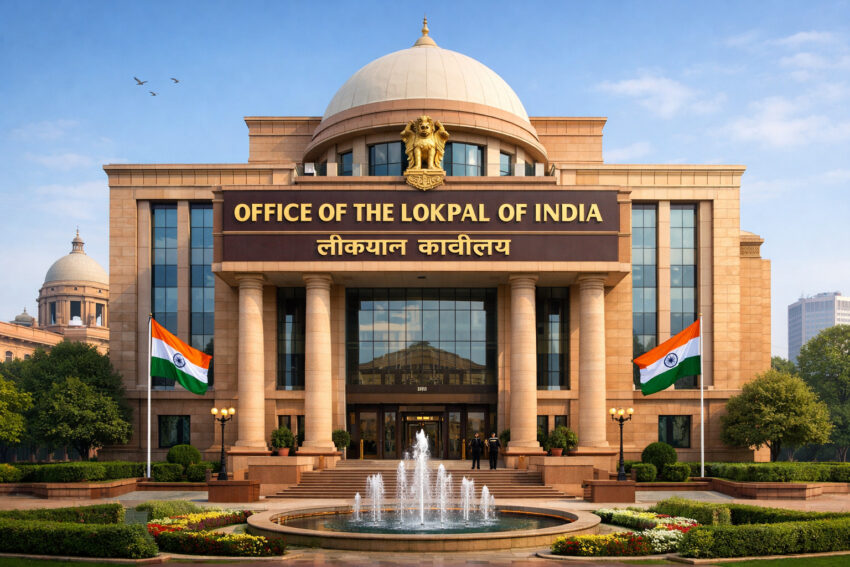
India’s anti-corruption architecture was built under duress of India Against Corruption (IAC) movement. The Lokpal Act of 2013 and the Whistleblower Protection Act of 2014 were extracted from a reluctant political class by mass public pressure. Once the pressure lifted, the political class did what it always does: it passed the law and then quietly left it to exist in irrelevance, as the bureaucracy ensured it would.
On 16th January 2026, The Lokpal celebrated its founding day. The chairman made a nice speech and said:
“On this Lokpal Day, let us renew our collective resolve to serve the nation with honesty, courage and humility. Let us reaffirm our faith in constitutional values and rededicate ourselves to the objective of fostering clean and accountable governance, in accordance with the rule of law.” The Chairperson reminded every citizen, every Non-Resident Indian, every Overseas Citizen of India, that they are the ground soldiers fighting corruption and if they opt to remain silent, that silence too is a form of corruption. He recalled what Martin Luther King Jr. said, “The ultimate tragedy is not the oppression of the bad people, but the silence of the good people.”
The White Elephant
No prosecutions were launched by Lokpal in the first five years (2019–2024). Yes for 5 years Lokpal in a country of 1.4 billion people could not find a single ‘allegedly’ corrupt bureaucrat. It was only in late 2024 and throughout 2025 that the first few sanctions for prosecution were granted.
Out of 8,703 complaints received, the Lokpal ordered 24 probes and granted 6 prosecution sanctions. Nine out of ten complaints were dismissed on technical grounds like wrong format. The Prosecution Wing, which the law explicitly required, was notified twelve years after the Act passed. No annual report has been uploaded since 2021-22.
VIP Culture
In 2025 the Lokpal, already renting an office at The Ashok Hotel at Rs 50 lakh per month, floated a tender for seven BMW 3 Series cars for its members at roughly Rs 70 lakh each. This from an institution with a total annual budget of Rs 44 crore. Former ministers and opposition MPs publicly asked why the guardians of integrity needed cars that Supreme Court judges do not get.
The answer lies in composition. The Lokpal is chaired by retired Supreme Court judges and former senior administrators. These are not outsiders investigating a culture they never experienced. They are the culture’s most senior alumni. They entered the institution carrying its habits, its expectations, and its sense of entitlement intact. Asking them to dismantle VIP culture is asking the system to prosecute itself.
This is the core pattern of solutions that become problems. Public outrage forces a law. The law creates an institution. The institution is staffed by people from inside the same hierarchy the law was meant to check. The institution then reproduces the culture it was designed to eliminate, while providing the political class a permanent answer to any criticism:
“We have a Lokpal.”
The result is that no serious case has been successfully prosecuted by Lokpal in the last 7 years. Let me reiterate, the problem of India is governance itself. Not the corruption.
The law is the alibi, not the remedy. And the alibi has been working perfectly for seven years.
References:
- Whistleblower Protection Act of 2014 is a law but not yet brought into force.
- BMW: https://the420.in/lokpal-bmw-controversy-broken-promise-anti-corruption-budget/
- Nauksham Chaudhary Speech:
- Press Release of Lokpal day.
- Corruption in India: (History, Law & Politics) Kindle Edition by Sandeep Bhalla (Author)