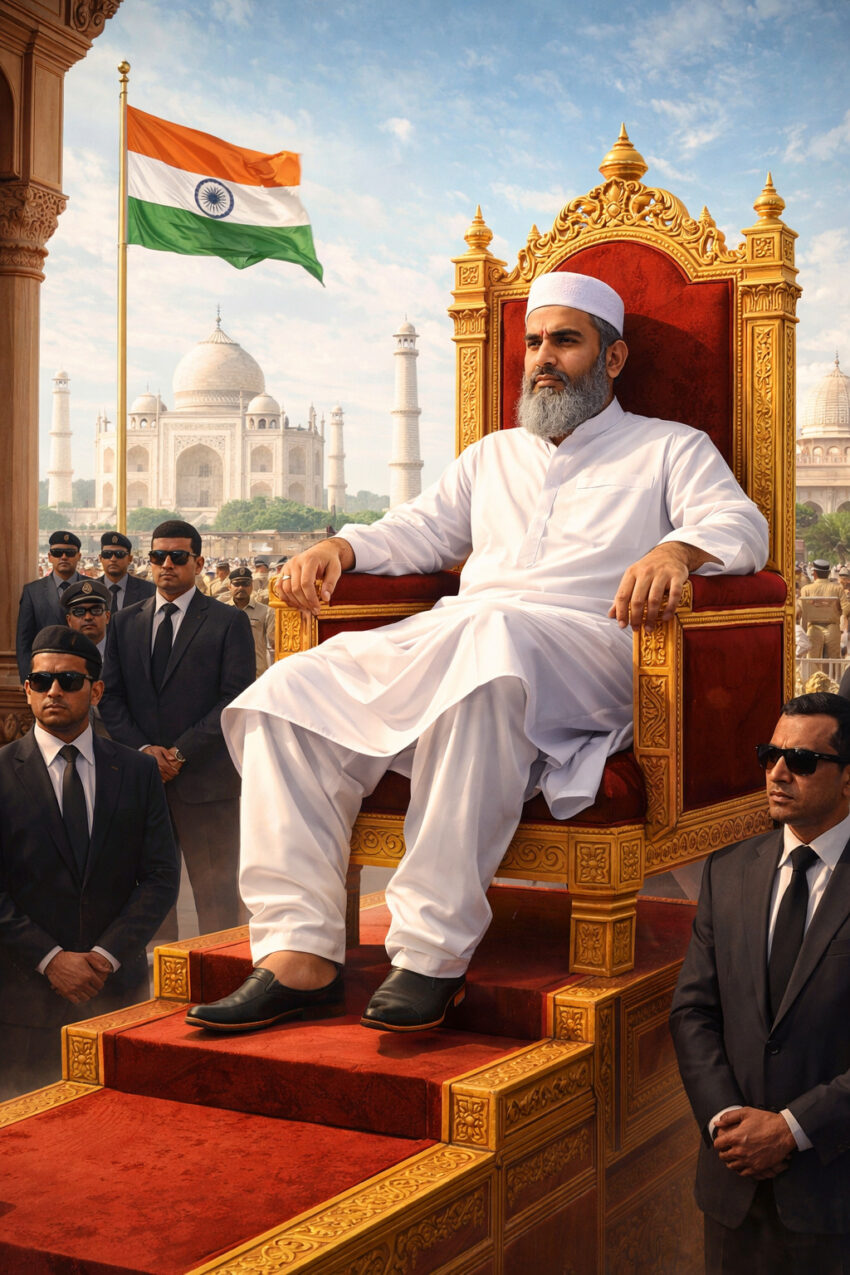
Reasons for Opposition to Dhurandhar 2.
Dhurandhar: Revenge is a movie about Pakistan’s institutional rot, but it produced an interesting side effect in India. Muslim politicians across the board opposed it.
Alia Shah is a journalist from Pakistan but settled in USA. She is a regular YouTuber. She watched and liked Dhurandhar 1 and is looking forward to watching Dhurandhar 2. She also advised Muslims of India to go and watch the movie in theatres. She also quoted Naureen Aslam, widow of SP Aslam, a character in the movie played by Sanjay Dutt. Naureen liked the portrayal of character. Similarly Alia also affirmed that the terrorists and events mentioned in the movie are by and large true.
Arif Ajakia a former Mayor of a town in Karachi, is now a YouTuber from England. He also affirmed the events and characters in the movie as true. Of course the movie is a fictionalized version of that. But the Muslim leaders in India are not happy.
DD News show titled “Do Took: Dhurandhar 2 Controversy” tried to debate this issue. The host Ashok Shrivastav listed the movie’s most vocal opponents: Asaduddin Owaisi, Waris Pathan, Akbaruddin Owaisi, Abu Azmi, Imran Masood, Rashid Alvi, Udit Raj, Hussain Dalwai. He asked why these specific leaders were trembling over a movie about terrorism and Pakistan. He highlighted that Pakistan is ranked number one on the Global Terrorism Index.
The host framed it as anti-nationalism. That framing is too simple and therefore too easy to dismiss. The more precise question is: what specific interest does each of these leaders have in the movie’s narrative being rejected?
The answer emerges from their own arguments, not the host’s accusations.
The View of Opposition
Imran Masood called the movie garbage and demanded to know why China was not shown as the enemy instead of focusing on internal criminals. This is a deflection so transparent it answers itself. A movie about Chinese interference would not implicate anyone sitting in that studio. A movie about ISI-criminal networks financing terror inside India implicates the specific ecosystem these leaders operate within.
Abu Azmi is mentioned in the debate for alleged links to the 1993 Bombay blast accused. He is simultaneously among the loudest voices against a movie that documents how the 1993 blast network was financed and operated. The overlap is not coincidental.
One opposition representative called Atiq Ahmed as a respected former Member of Parliament. The movie depicts a character inspired by him with documented ISI and Lashkar-e-Taiba connections. The leaders defending his reputation were simultaneously opposing a movie that put those connections on screen. They were not defending a dead man. They were defending a network.
The opposition also demanded to know the source of the film’s funding and called for legal inquiries into its financing. These are the same leaders who have never once demanded transparency from Himal Southasian, The Wire, or any other grant-funded publication that produces coordinated attacks on Indian security narratives. The standard applies in one direction only.
The Domestic Distribution Network
In earlier parts of this series, the Goldilocks Fitna Management project was described as requiring precise temperature calibration. Hot enough to consolidate a vote bank. Cool enough that actual violence does not erupt and discredit the managers.
This project has three operational layers.
The international layer is grant-funded publications like Himal Southasian, funded by Open Society Foundations, producing pre-release attacks on Indian films from Colombo and New York. Raza Rumi reviewed Dhurandhar before watching it. The conclusion preceded the movie.
The domestic intellectual layer is critics, journalists, and activists who provide the vocabulary. Testosterone. Toxic. Propaganda. Islamophobia. Written identically across platforms because the script is shared before the movie is watched, as Shobha De accidentally confirmed.
The political layer is elected representatives who convert narrative into institutional pressure. Calls for bans. Demands for funding inquiries. Legal action threats. This converts cultural criticism into state-level harassment of the film’s producers.
All three layers activated simultaneously against Dhurandhar 2. This coordination is not evidence of conspiracy. It shows how small the circle is, and yet how politically and intellectually diverse.
The Undebated Question
The DD News host asked why these leaders oppose the film. His answer was anti-nationalism. The opposition’s answer was propaganda and defamation of Muslims.
Neither answer is complete.
The Ashraf class in India control Muslim politics. This class claims descent-from-Arabia or Persia and they manage the political representation of the broader Muslim community in India called pasmanda. Ashraf has a specific structural interest in the Pakistan project remaining sacred. They have a controlling interest in Pakistan too. They are the landlords who own thousands of acres of land in Pakistan which never underwent land reform like India. It has never had a land ceiling law.
This ashraf class need not take orders from Rawalpindi. The loyalty of larger section of Muslims to this ashraf section is the product of same architecture which justify existence of Pakistan.
Dhurandhar 2 shows every Pakistani institutional leader as purchasable, every officer as a potential agent, every politician available for the right price. For the ordinary Indian Muslim watching this film, the reaction is largely what the AajTak Radio segment confirmed: enjoyment, laughter, and mild guilt about enjoying it.
For the Ashraf political class, the reaction is different. The movie does not just expose Pakistan. It exposes the framework they depend on. A Pakistan shown as a corrupt, purchasable, jihad-as-project state is not the Pakistan that justifies their political identity inside India.
That is what the opposition was protecting. Not Muslims. The framework.
The Unasked Question
The debate asked why these leaders oppose the film. Nobody asked the more important question: why did ordinary Indian Muslims go watch it anyway?
400 crores on opening weekend answers that question without words.
References:
- Alia Shah:
- Arif Ajakia:
- DD News Debate:
- Goldilocks Fitna Management: https://sandeepbhalla.in/the-new-face-of-journalism-activism/
- Cognitive Decline in Pakistan: https://sandeepbhalla.in/cognitive-decline-in-pakistan-is-shocking/
- Raza Rumi Counter-Critique: https://sandeepbhalla.in/raza-rumi-the-critic-who-never-watched-the-dhurandhar-movie-and-the-pakistan-he-never-visited/
- Part 4, The Boomerang: https://sandeepbhalla.in/dhurandhar-one-to-the-boomerang/